
About coal
Coal was used as a fuel by the Chinese as early as 3,000 years ago and subsequently by the Greeks (4th century BC) and the Romans. The earliest reports of the use of coal in Europe originate in England and date as far back as the Middle Ages, when local blacksmiths were the first to use it. Circa AD 900, certain taxes in England were also paid with coal. Coal mining in England did not develop substantially until after 1619, when black coal, rather than charcoal, began to be used for smelting iron.
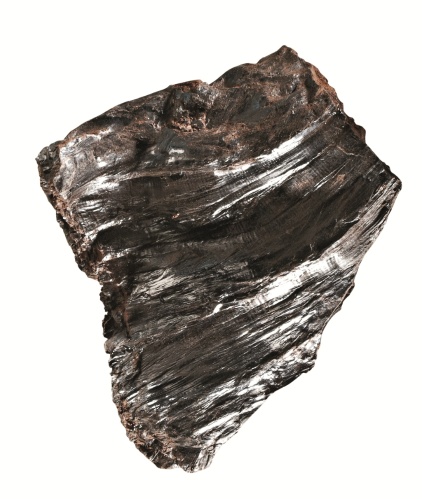
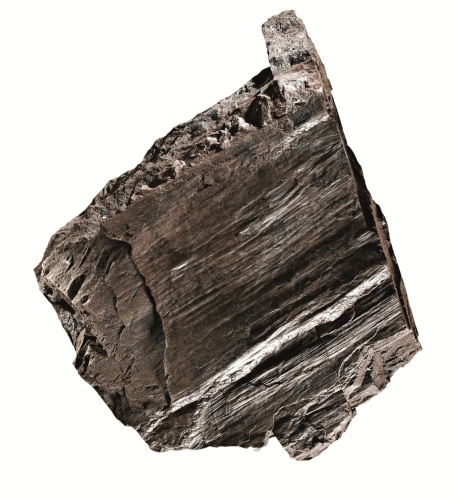
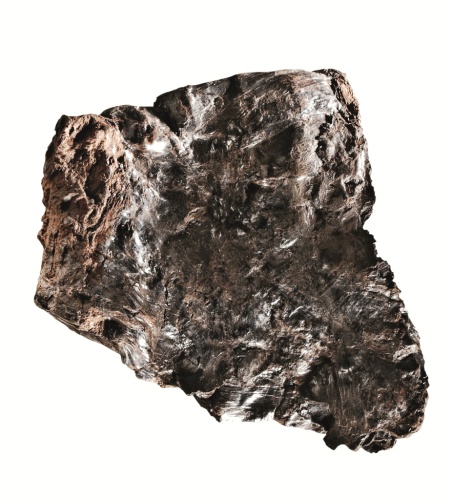
Coal was first recorded on Slovenian soil in 1647 and again in 1678 in the inventory records of Ljubljana pharmacies under the name ‘dragon’s blood’ — ‘Sangvis draconis’. Valvasor also records in 1689 that coal — ‘dragon’s blood’ — was frequently used by apothecaries to treat sick livestock. The first accidental discoveries of coal in the Slovene territory date from the 17th century; more systematic coal prospecting began in the second half of the 18th century and continued for almost a century. The Austrian state undertook the most extensive such operation between 1842 and 1845, when coal was prospected for in as many as seventy locations in Carniola and Styria. It was then that nearly all the coal deposits in Slovenia were discovered.
Coal is formed from the remains of plants. These may be trees, pieces of wood, or various parts of soft plants, sometimes even algae, and the most important thing is that these plant remains are protected from oxygen, from the air, so that they do not decompose or rot, but instead slowly accumulate and undergo transformation.
It is formed when trees fall into a marsh; branches and twigs are also broken. The marsh was inundated by water and peat formed first. Owing to geological processes, the deposit gradually subsided by approximately one millimetre per year or less, and was subsequently silted up by sediments such as sand and gravel.
Consequently, plant remains were buried ever deeper; the temperature rose gradually, pressures mounted, and fragments of trees and other plant material were compressed together, from which coal slowly began to form.
The following example of coal is lignite, which remains fairly similar to wood and is only slightly compressed. If the lignite originates predominantly from the central part of the marsh, where there were fewer trees and primarily smaller plants, it is finer-grained. If temperatures subsequently increased and the material was subjected to further heating, more mature types of coal would develop, beginning with brown coal. It required almost 100 degrees Celsius, and, as can be seen from the samples, no particular plant structures are recognisable in this coal. If maturation were to continue further, one would arrive at what is known as black coal. The more mature the coal becomes, the greater its carbon content and the lower its hydrogen and oxygen contents; it loses water and gases, and progressively simpler organic compounds are formed. Consequently, the more mature the coal is, the more combustible it becomes. At the very end, the coal contains almost 99 per cent carbon; such coal is known as anthracite.